The recent ADA Standards of Care in Diabetes advocate for expanded use of automated insulin delivery (AID) systems in T2D:1
Elevated recommendation of AID use in T2D to preferred for adults
Advocates for removal of requirements for AID use (i.e., C-peptide level, islet autoantibodies)
Recommends consideration for adults on basal insulin who are not achieving individualized glycemic targets
Type 2 diabetes is a complex disease to navigate with a variety of complexities for the patient and provider. Type 2 diabetes is a progressive disease with dynamic needs and no one-size-fits-all solution. For providers, it is difficult to achieve therapeutic inertia with so many available medication options, lack of insight to patient’s individual needs and behaviors, and variations in how individual patients respond to food, medication, or lifestyle changes.
Tandem AID systems can help reduce the burden and keep up with the complexity of type 2 diabetes. Control-IQ+ is the only AID system on the market with a randomized controlled trial supporting the use of Control-IQ+ in patients with type 2 diabetes.
2IQP Randomized, Controlled Trial
Study Design:
Objectives: To assess the efficacy and safety of Control-IQ+ in adults with type 2 diabetes compared to multiple daily injections or a sensor-augmented pump.
Design:
13-week, multicenter, parallel-group, randomized control trial conducted at 21 centers in the United States and Canada, including one U.S. Veterans Affairs hospital
The trial compared the treatment effects of Control-IQ+ to a standard care group that continued its pre-study insulin delivery regimen. Both groups were trained in the use of CGM.
Study Results:
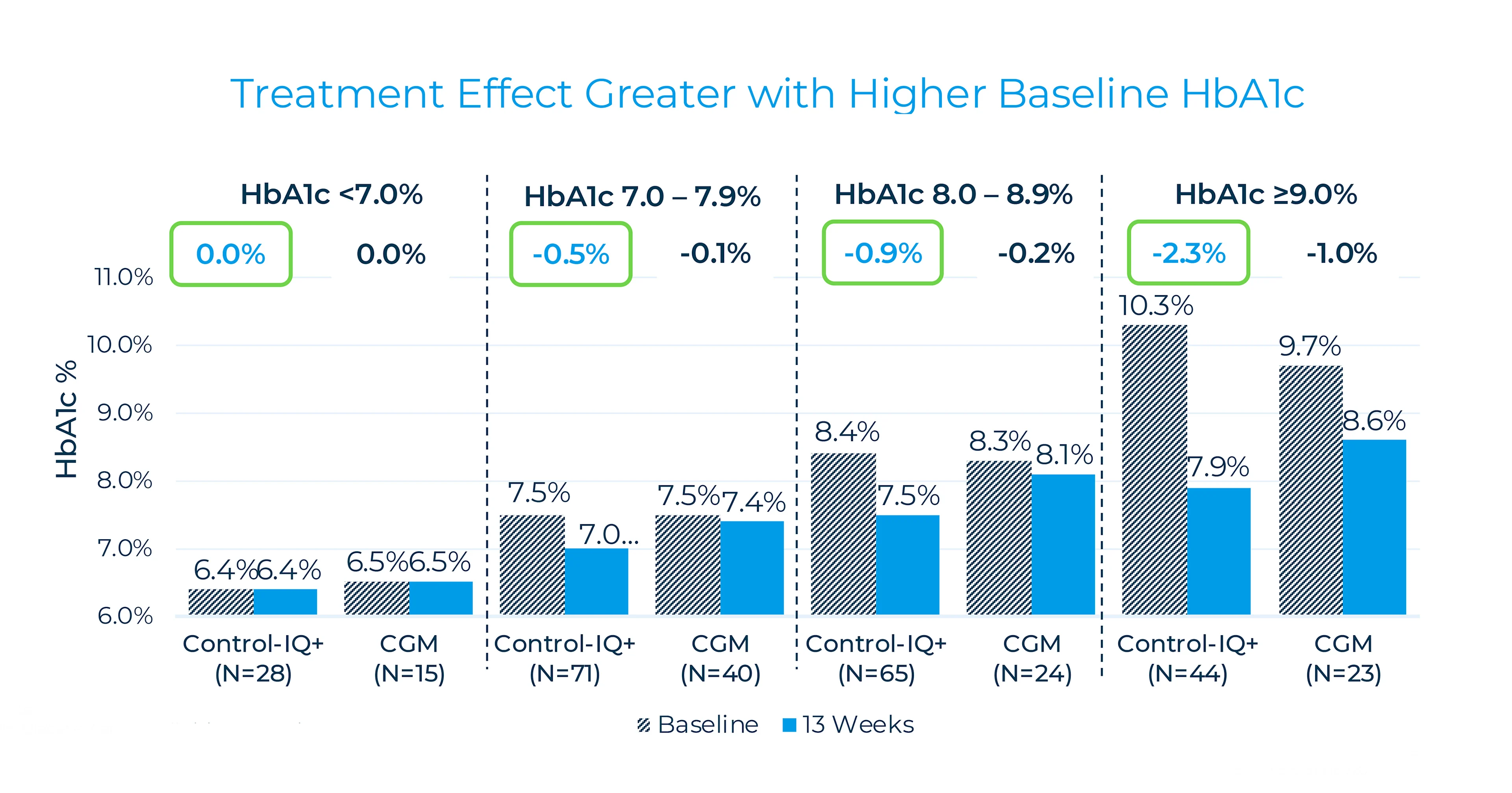
Nearly everyone with type 2 diabetes not meeting therapy goals is an excellent candidate for Control-IQ+ automated insulin delivery
In Practice:
Consider using Exercise Activity (higher treatment range of 140-160 mg/dL) for patients who have high HbA1c transitioning to AID to minimize false hypoglycemia symptoms until glucose levels stabilize.
Further Reading: Read the subanalysis: “Consistent Benefit of Control-IQ+ Automated Insulin Delivery Across a Range of Characteristics of Adults with Type 2 Diabetes”
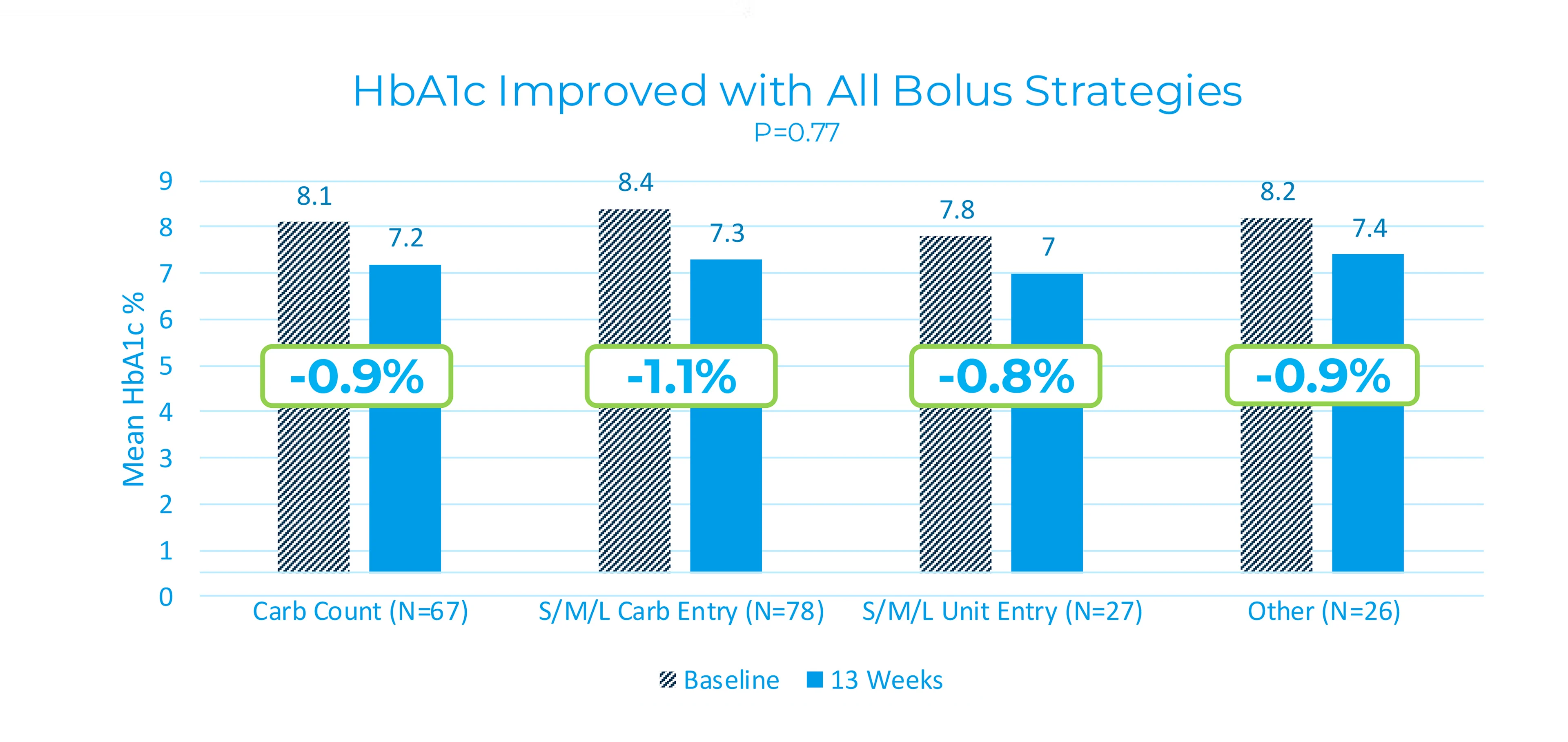
2. Simplified bolus strategies worked well for adults with type 2 diabetes using Control-IQ+ in the 2IQP trial. All bolus strategies led to substantial HbA1c improvements, without safety concerns:
In Practice:
Simplified bolusing worksheets from Tandem are available to help coach patients on simplified bolusing strategies:
Further Reading: Read the subanalysis: “Simplified Meal Bolus Strategies with Control-IQ+ Automated Insulin Delivery Are Safe and Effective in Adults with Type 2 Diabetes”
3. Control-IQ+ improves glycemia in people with type 2 diabetes already on a GLP-1RA, with a modest reduction in insulin requirements and no increase in weight.
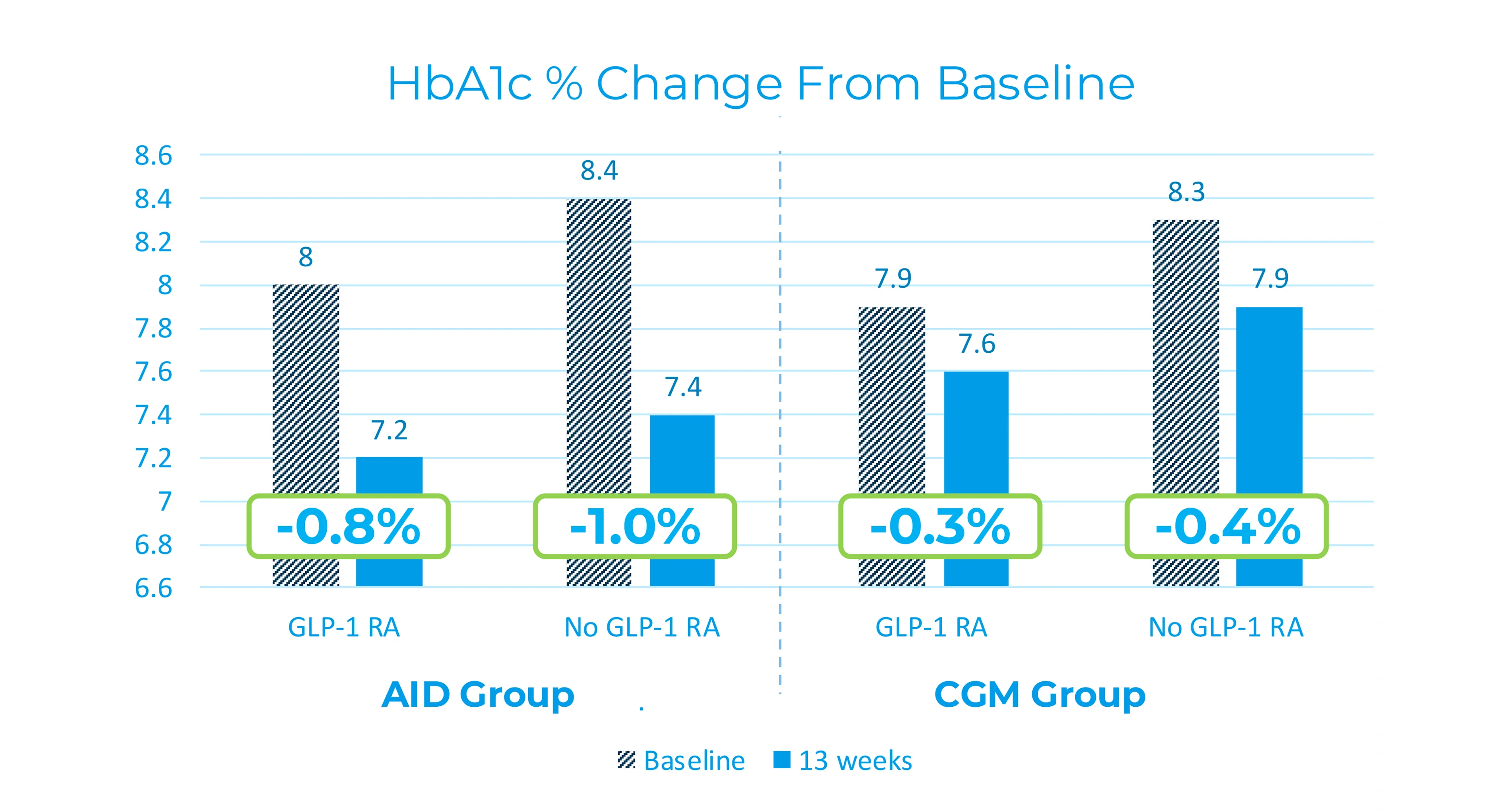
No significant weight gain: For GLP-1 RA users, there was no significant weight difference after 13 weeks with AID versus control: 0.9kg, P-0.10. By contrast, non-users had a significant weight gain of 1.9kg versus control.
Reduced insulin usage: Among GLP-1 RA users, total daily insulin decreased by about 8.0 units per day with AID while outcomes improved.
In Practice:
Create a new Personal Profile with 15-20% reduction in all settings when starting a GLP-1 RA. This preserves the original Profile in case the patient does not tolerate the GLP-1 RA and discontinues use. Learn how to set up a new Personal Profile here.
Extended bolus helps match mealtime insulin to delayed gastric emptying with GLP-1 RAs and can be adjusted or cancelled if meals aren’t fully eaten. Learn how to set up an extended bolus here.
Temp basal rate can be useful for managing unpredictable GI symptoms or during GLP-1 RA dose titration. Learn how to set a Temp Basal Rate here.
Further Reading: Read the subanalysis “Additive Benefit of Control-IQ+ AID to GLP-1 Receptor Agonist Use in Adults with Type 2 Diabetes”
References:
Kudva YC, Raghinaru D, Lum JW, et al. N Engl J Med. 2025;392(18):1801-1812.