Benefits of Insulin Pump Therapy

Designed to work like a healthy pancreas, an insulin pump is a small medical device that delivers only one type of insulin. Using personal settings determined with your healthcare provider and the touchscreen interface, insulin is delivered both continuously (basal) and in larger doses for meals (bolus).
Tubing
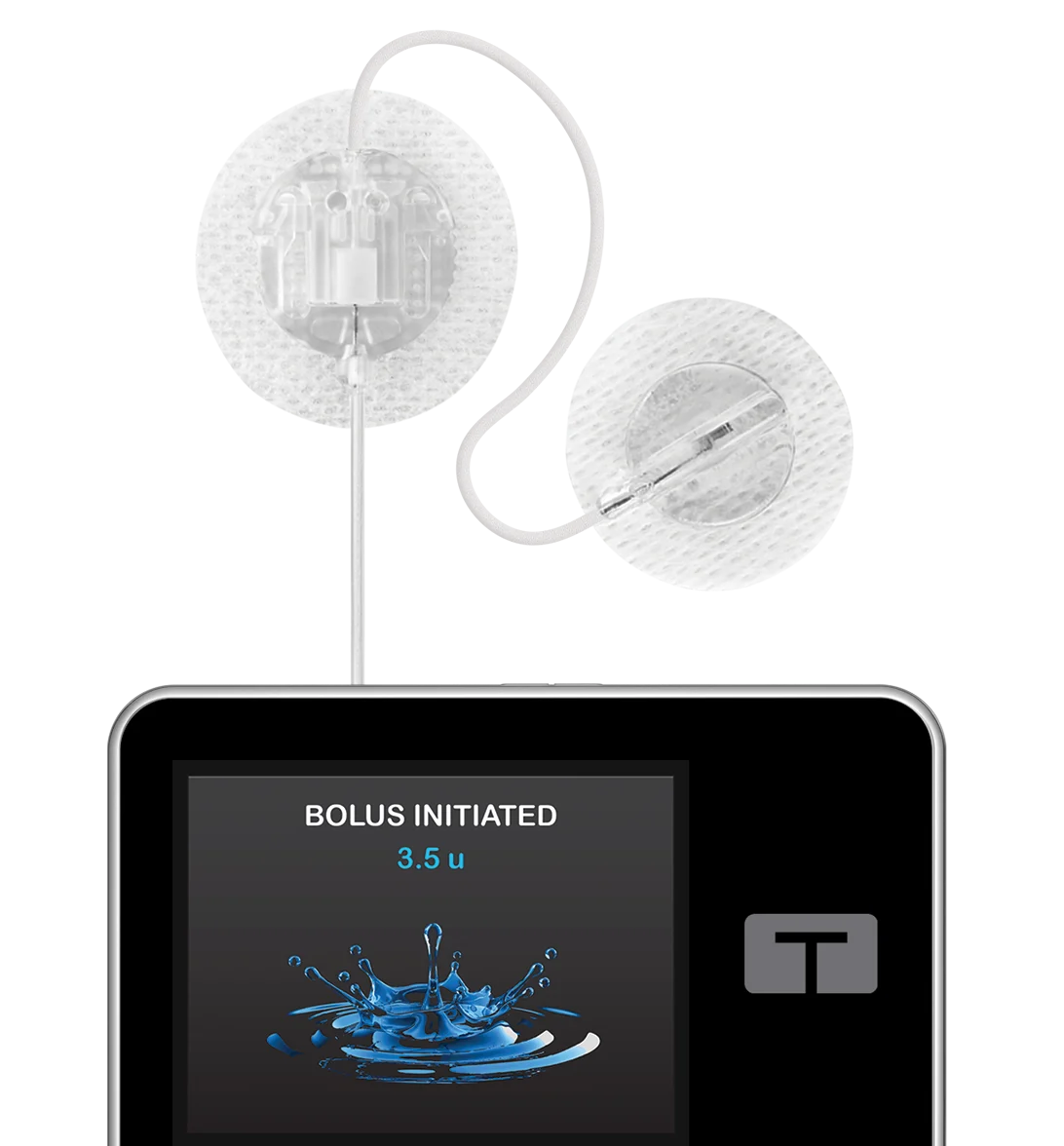
The insulin flows from the pump through thin, flexible tubing, available in a variety of lengths.
Infusion Site
The tubing is attached to an adhesive patch, which holds a short, fine tube (cannula) under the skin. This infusion site is changed every two to three days.



Download TodayFree Virtual Pump Demo
The t:simulator app lets you test drive the easy-to-use touchscreen interface of the t:slim X2 insulin pump and its predictive technologies using your smartphone.




Blood Sugar Control
Studies have shown that pump therapy, when paired with proper training and support, may result in better blood sugar control than daily injections.1,2,3 Additional benefits may include decreased duration of high blood sugar with no increase in severe low blood sugar, fewer large swings in blood sugar, and lower total daily insulin use.
Reporting & Analysis
Keeping detailed records of every blood sugar value, carb, and insulin dose you take is a lot to keep up with. An insulin pump keeps track of these details for you. You can also upload your pump data to an online management system so both you and your healthcare provider have access to it and can make informed management decisions.
Discretion
When you’re taking multiple daily injections, you have to pull out your pen or vial and syringe in public. Delivering insulin with just a few button presses on a pump can be so discreet, others around you won't even notice.
Convenience
Have you ever realized you left your insulin at home? With an insulin pump, your insulin goes with you, so you can stay on the go! Additionally, since pumps use only one kind of insulin you have one less prescription to fill.
Flexibility
Anyone with diabetes knows that blood sugar varies from hour-to-hour and day-to-day depending on many factors. Using pump features like temporary basal rates, extended boluses, and personal profiles, you can easily change insulin delivery for different situations. Because pumps use rapid-acting insulin, you can also make adjustments “on the fly.”
Accuracy
Insulin pumps deliver insulin in precise amounts that can’t be achieved with syringes or pens. They can also calculate your insulin doses for you. All you do is enter how much you are eating and your current blood sugar value, and your insulin pump figures out the rest. This results in better matching of insulin to food.
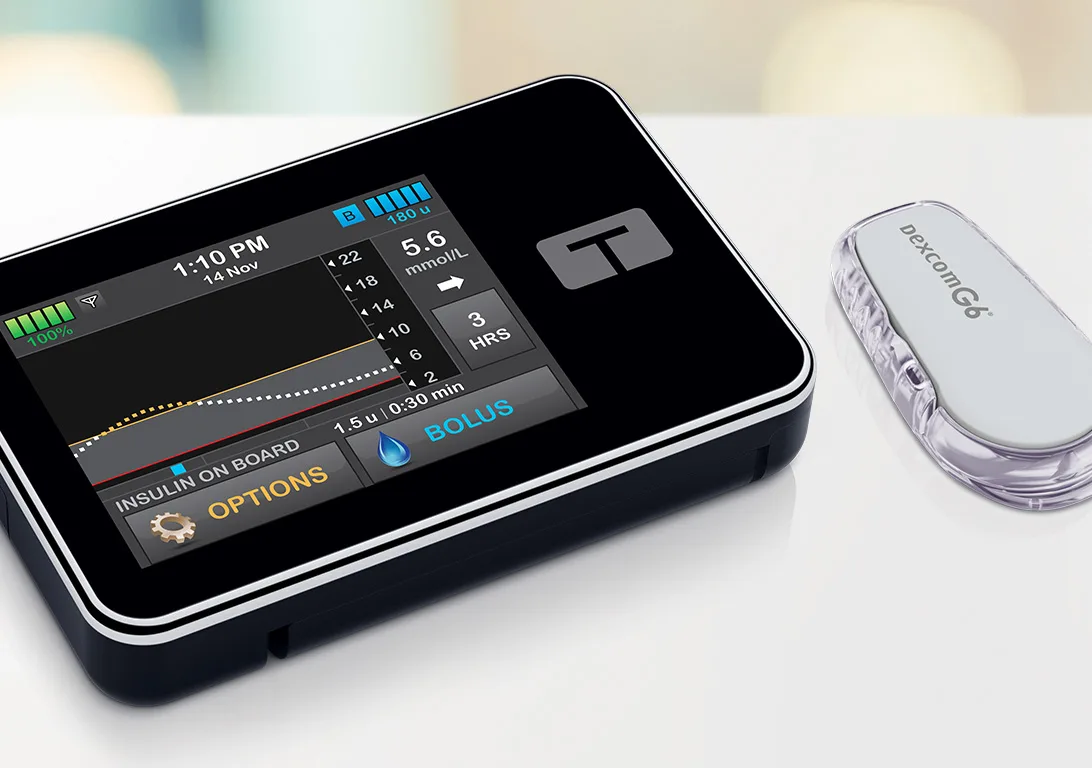
A continuous glucose monitoring (CGM) system measures glucose levels throughout the day and night. People who combine CGM with insulin pump therapy* have the best overall glucose control when compared to injections alone.4
What's next?
Whether you're ready to get a Tandem insulin pump, or looking to check insurance coverage, you’ll find everything you need here.
* Dexcom CGM sold separately.
References
1. Hoogma RPLM, Hammond PJ, Gomis R, et al. Comparison of the effects of continuous subcutaneous insulin infusion (CSII) and NPH-based multiple daily insulin injections (MDI) on glycaemic control and quality of life: results of the 5-nations trial. Diabet Med. 2005;23(2):141-147.
2. Bode BW, Sabbah HT, Gross TM. Diabetes management in the new millennium using insulin pump therapy. Diabet Metab Res Rev. 2002;18(S1):S14-S20
3. Reznik Y, Cohen O, Aronson R, et al. Insulin pump treatment compared with multiple daily injections for treatment of type 2 diabetes (OpT2mise): a randomised open-label controlled trial. Lancet. 2014;384(9950):1265-1272.
4. Foster N, Miller K, Tamborlane W, Bergenstal R, Beck R, & T1D Exchange Clinical Network. Continuous glucose monitoring in patients with type 1 diabetes using insulin injections. Diabetes Care. 2016;39(6): e81-e82.